Can a Droopy Face Be Prevented?
Can a droopy face be prevented? Slowed, partly, if you mean the gradual sagging that comes with age. But if one side of your face has dropped suddenly, that is not ageing. That is a medical emergency, and you should call 999 now rather than read on.
Those two situations share a description and share nothing else. This guide separates them, then covers what can and cannot be done about the gradual kind.
On this page: The emergency version · What gradual sagging actually is · What is preventable · What has evidence · What does not work · The UK picture · What to ask · FAQs
First: sudden facial drooping is an emergency
If your face has dropped on one side over minutes or hours, stop reading and call 999.
NHS Act FAST guidance describes the first signs of a stroke as face weakness, where one side of the face may droop and it might be hard to smile; arm weakness, where you cannot fully lift both arms or keep them raised; and speech problems, where speech becomes slurred or the person sounds confused. The NHS is explicit that a single symptom is enough. You do not need all three, and it does not need to look dramatic.
The same guidance stresses that any sign of a stroke is always an emergency and that symptoms can be less obvious than people expect. It applies even if the symptoms have already passed.
Sudden one-sided facial weakness has other possible causes, including Bell’s palsy, a temporary weakness of the facial nerve. Telling those apart is not something to attempt from an article. Assume the more serious explanation and let a clinician sort it out.
Everything below this point is about slow, symmetrical change over years. It is a different subject entirely.
What gradual facial sagging actually is
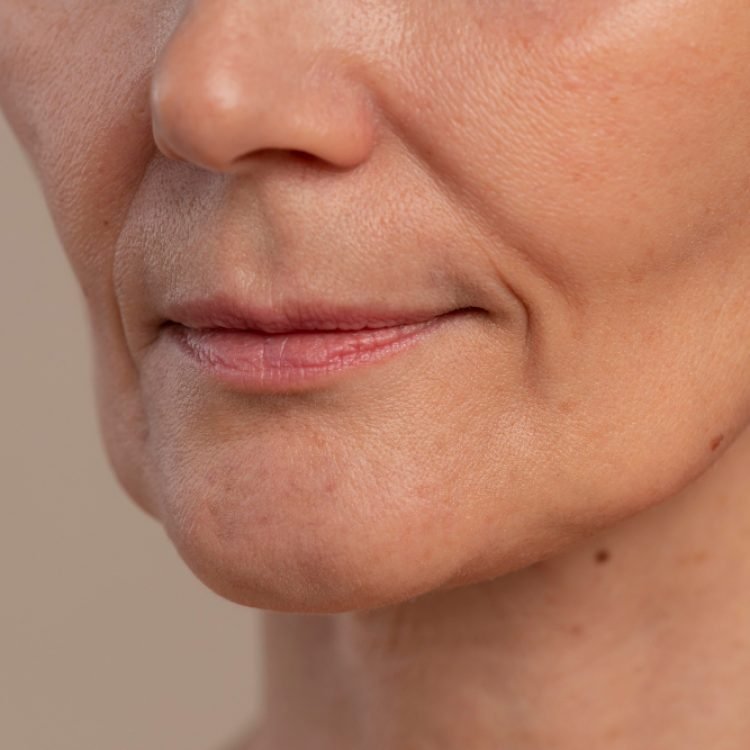
Age-related drooping is not one process. Four layers change, at different rates.
Bone. The facial skeleton remodels over decades. The eye socket widens, the jaw and mid-face lose projection. This removes the scaffolding that soft tissue sits on.
Fat pads. The face contains distinct compartments of fat rather than one even layer. Some shrink with age and some descend, which is why the mid-face can hollow while the jawline softens at the same time.
Ligaments. Retaining ligaments tether facial soft tissue to the underlying bone. As these loosen, tissue shifts downward.
Skin. Collagen and elastin decline with age and with cumulative ultraviolet exposure, reducing the skin’s ability to hold shape.
Only the last of those has meaningful preventive evidence behind it. That is the honest headline.
Can a droopy face be prevented, layer by layer
Set out plainly rather than as a list of tips.
| Layer | Preventable? | What influences it |
|---|---|---|
| Facial bone remodelling | No | Age and genetics. Nothing in skincare or exercise alters bone |
| Fat pad descent and volume loss | Not established | Age, genetics, and overall body composition changes |
| Ligament laxity | No known preventive measure | Age |
| Skin collagen and elastin | Partly | Cumulative UV exposure, smoking, age |
Retaining ligaments are fibrous bands anchoring facial tissue to bone. Photoageing means skin ageing driven by ultraviolet light rather than time alone.
Read down that table and one row is influenceable. Anything promising to prevent facial drooping is, at best, addressing a quarter of the problem.
What actually has evidence behind it
Two things, and only one has a randomised trial.
Sun protection. A randomised controlled trial published in Annals of Internal Medicine followed 903 adults under 55 in Nambour, Australia for four and a half years, assigning them to daily broad-spectrum sunscreen or discretionary use. The daily sunscreen group showed significantly less skin ageing. Beta-carotene supplements showed no effect.
Three caveats belong with that finding. The trial ran in subtropical Queensland where UV levels far exceed anything in Britain, so the effect size here is an extrapolation. It measured overall photoageing rather than facial drooping specifically. And it compared daily use against discretionary use rather than against nothing.
For UK conditions, NHS advice on sunscreen and sun safety recommends time in the shade between 11am and 3pm from March to October, notes that most people apply too little, and advises reapplying after swimming, sweating or towel drying.
Not smoking. Smoking is widely reported as associated with premature skin ageing. The association is consistent, though separating it cleanly from sun exposure and other lifestyle factors in observational research is difficult.
Neither addresses bone, fat pads or ligaments. Both are worth doing for reasons well beyond appearance.
What does not prevent facial drooping
Several popular claims run ahead of the evidence.
Facial exercises. Frequently promoted for lifting the face. The published evidence is thin and the studies that exist tend to be small and short. No UK clinical guidance recommends them, and the theory conflicts with the fact that most drooping originates in bone, fat and ligament rather than muscle tone.
Mewing. The tongue-posture technique circulating on social media claims to reshape the adult facial skeleton. The claims exceed anything published, particularly for adults whose facial growth is complete.
Sleeping position. Occasionally blamed for facial asymmetry. Whether habitual side-sleeping causes lasting change is not established.
Facial massage and gua sha tools. These can temporarily reduce puffiness, which is a fluid effect rather than a structural one. No good evidence supports lasting change to facial position.
Creams claiming to lift. Topical products act on skin. They do not reposition fat pads or tighten ligaments, whatever the packaging implies.
Facial drooping and the UK system
Four things matter here, and the first two are not cosmetic.
- Sudden drooping goes to 999, not to a GP. The stroke pathway is time-critical, and NHS guidance is that one symptom is enough to call.
- New drooping that came on over days rather than minutes still needs same-week assessment. Bell’s palsy responds better to early treatment, and other causes need excluding. That is a GP or NHS 111 conversation, not a cosmetic one.
- Gradual age-related sagging is not NHS-funded. Procedures aimed at lifting facial tissue for appearance reasons are classed as cosmetic and are not routinely commissioned. Criteria vary between integrated care boards.
- Insurance rarely helps. Many UK private medical insurance policies exclude both cosmetic procedures and chronic or pre-existing conditions.
Because anything cosmetic would be self-funded, there is no clinical deadline and no reason to rush a decision.
The droopy face concern page covers facial anatomy and the causes of sagging in more depth. If your main concern is the jawline specifically, the guide to whether a double chin can be prevented covers the four contributors there. For detail on self-funded options and what each involves, that sits on Revitalize in Turkey rather than here.
What to ask your doctor
Worth asking a GMC-registered doctor:
- Has this come on gradually over years, or is there anything about the timing that concerns you?
- Is the change symmetrical, or is one side different from the other?
- Is there any weakness here, as opposed to soft tissue simply sitting lower?
- Could any medication or medical condition I have be contributing?
- Given my age and history, how much difference would sun protection realistically make from here?
- Is there any medical reason to investigate this, or is it entirely cosmetic?
Frequently asked questions
What is the difference between a droopy face and facial weakness?
Gradual sagging is soft tissue sitting lower over years, symmetrically, with normal movement. Facial weakness means the muscles are not working properly, usually on one side, and often affects smiling or closing an eye. Weakness that appears suddenly is a medical emergency. NHS guidance advises calling 999 at the first sign.
At what age does the face start to droop?
There is no set age. Facial bone remodelling, fat pad changes and skin elasticity loss all progress at different rates in different people, and are influenced by genetics and cumulative sun exposure. Some people notice changes in their thirties and others much later. Comparison with peers tells you very little.
Do facial exercises prevent a droopy face?
The evidence is thin. Published studies tend to be small and short, and no UK clinical guidance recommends facial exercises. The theory also sits awkwardly with the anatomy, since most age-related drooping originates in bone, fat compartments and ligaments rather than in muscle tone.
Does sunscreen prevent facial sagging?
It slows photoageing, which affects one of four contributing layers. A randomised trial found daily sunscreen produced significantly less skin ageing than discretionary use over four and a half years. That trial ran in far higher UV conditions than the UK and measured overall photoageing rather than facial drooping specifically.
Can a droopy face be reversed without treatment?
Gradual age-related change does not reverse on its own, because bone remodelling, fat pad descent and ligament laxity are not processes that undo themselves. Sudden drooping from a treatable cause such as Bell’s palsy often does improve. That distinction is a reason to have new changes assessed rather than assumed.
Should I see a doctor about gradual facial sagging?
Not usually for the sagging itself, which is a normal part of ageing rather than a condition. It is worth an appointment if the change is asymmetric, has come on quickly, involves any weakness, or if you are unsure whether what you are seeing is ordinary. A GP can tell you which it is.