Does Ab Muscle Separation Get Better Over Time?
Does ab muscle separation get better over time? Usually yes, and most of the improvement happens in the first year after birth. In one study of 300 first-time mothers, 60% had it at six weeks, 45.4% at six months and 32.6% at twelve months. Roughly a third still had it at a year.
The curve flattens after that, which is why the first year matters more than any year after it.
On this page: What the numbers show · Why the first year matters · Why the gap is not the point · What the evidence does not settle · When it is a hernia · The NHS pathway · What to ask · FAQs
Does ab muscle separation get better over time on its own?
For most people, yes. This is one of the few concerns on this site with real numbers behind the natural history.
A prospective study following 300 first-time mothers from pregnancy to twelve months after birth found the proportion with separation fell from 60% at six weeks postpartum to 45.4% at six months and 32.6% at twelve months.
| Time after birth | Proportion with separation | What that means |
|---|---|---|
| 6 weeks | 60% | Very common. Too early to draw conclusions |
| 6 months | 45.4% | Around a quarter of cases have resolved since six weeks |
| 12 months | 32.6% | Around half of those present at six weeks have resolved |
Two things to hold onto. Most spontaneous improvement occurs inside the first year. And roughly a third of women still have measurable separation at twelve months, which is common rather than a sign that something has gone wrong.
The ab muscle separation concern page covers the anatomy and what causes it.
Why the first year is the window
NHS patient information from Bedfordshire Hospitals states that a small separation will normally recover on its own by eight weeks after birth, and that a larger separation may take up to twelve months to resolve and may need guidance from a specialist physiotherapist.
That matches the study numbers. The steepest improvement is early, the curve flattens through the year, and spontaneous change after twelve months is much less likely.
It does not mean nothing can change after a year. It means that after a year you are generally looking at guided rehabilitation rather than waiting, and that is a conversation with a physiotherapist rather than a decision to keep waiting and hoping.
Many UK pelvic health services accept referrals up to a year after birth, so knowing the timeline also helps you not miss the window for support.
Why the size of the gap is not the point
This is the part most content misses, and it changes what you should be measuring.
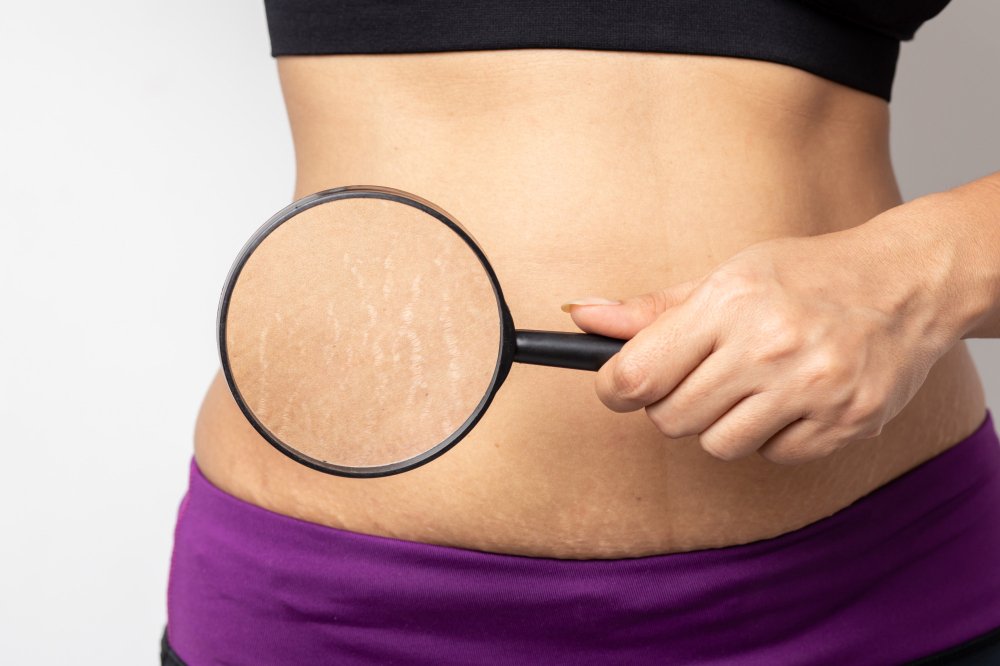
The concern is usually framed as how many fingers fit in the gap. Clinically, what matters more is whether the connective tissue running down the midline, called the linea alba, can generate tension when you engage your abdominal muscles.
A wide gap with good tension can function better than a narrow gap with none. Someone can close their gap by a centimetre and feel no different, and someone else can keep the same measurement and manage considerably better.
That reframing matters because it changes the goal from a number to a function. A pelvic health physiotherapist assesses tension and how the abdominal wall behaves under load, not just width. Chasing a finger-width measurement on your own can be misleading in both directions.
What the evidence does not settle
Two genuine gaps, and both are worth knowing before you read confident advice online.
Whether separation causes symptoms is contested. The 300-woman study found no difference in reported lower back and pelvic pain between women with and without separation at twelve months. A more recent cohort following first-time mothers to twelve months found the opposite: those with separation reported worse back pain and worse health-related quality of life. Two reasonable studies, opposite findings. Nobody can tell you with confidence whether your separation is responsible for your symptoms.
Evidence for specific exercise programmes is weak. A published study notes there is currently very low-quality scientific evidence to recommend specific exercise programmes for treating separation after birth. That does not mean exercise is useless. It means the confident programmes sold online are running ahead of what has been demonstrated, and that individual assessment beats a generic plan.
Being told this is more useful than being sold certainty. It also explains why NHS services assess individually rather than handing out one protocol.
When it is not just separation
One situation needs distinguishing, because it is treated differently.
A hernia is a bulge where tissue pushes through a defect in the abdominal wall. Separation is a widening of the midline without a true hole. They can look similar from the outside, particularly around the navel.
Signs worth taking to a GP rather than a physiotherapist first: a discrete lump rather than a general bulge, a bulge that feels firm, one that does not flatten when you lie down, or any that is painful, tender or getting larger. Sudden severe pain with a bulge that will not reduce needs urgent medical attention.
That distinction is not something to settle from a photograph or a website. It is a hands-on examination.
Ab muscle separation and the NHS
Unlike most concerns on this site, there is a genuine NHS route here, and it is underused.
- Pelvic health physiotherapy covers this. NHS pelvic health and perinatal physiotherapy services explicitly treat separation of the abdominal muscles after pregnancy, alongside pelvic floor and pregnancy-related musculoskeletal problems.
- Many services accept self-referral. Arrangements vary considerably between trusts and regions. Some take self-referrals directly, others need a midwife or GP referral. Search your local trust’s pelvic health physiotherapy page rather than assuming.
- There is usually a time limit. Many perinatal pelvic health services cover pregnancy and up to one year after birth. Some cover less. That is another reason not to wait and see indefinitely.
- Ask at your postnatal check. The six to eight week check is a natural point to raise it, and separation is a recognised reason for referral rather than something to feel awkward about mentioning.
Surgical repair for separation alone is generally not NHS-funded where the concern is appearance. Where a hernia is present, that is assessed on clinical grounds and follows a different pathway entirely. Criteria vary between integrated care boards, so ask your GP what applies locally.
For detail on self-funded options and what each involves, that sits on Revitalize in Turkey rather than here.
What to ask your doctor or physiotherapist
Worth asking a GMC-registered doctor or a registered physiotherapist:
- Is this separation, a hernia, or both?
- How does my abdominal wall behave under load, rather than just how wide is the gap?
- Given how long it has been since birth, is further spontaneous improvement likely?
- Can I self-refer to pelvic health physiotherapy locally, or do I need a referral?
- Is there a time limit on the local service I should know about?
- Are my symptoms likely to be related to the separation, or is something else worth checking?
Frequently asked questions
How long does ab muscle separation take to heal?
Most spontaneous improvement happens within twelve months. NHS patient information states a small separation normally recovers on its own by eight weeks, while a larger one may take up to twelve months and need specialist physiotherapy guidance. Around a third of women still have measurable separation at one year.
Will ab muscle separation go away without exercise?
It often improves without any specific programme, particularly in the first months after birth. Published review evidence describes only very low-quality support for recommending specific exercise programmes. That is not an argument against rehabilitation, but individual assessment by a pelvic health physiotherapist is better supported than a generic online plan.
Is it too late to fix separation years after birth?
Spontaneous improvement is much less likely after twelve months, but that is different from nothing being possible. What changes is that guided rehabilitation replaces waiting. A physiotherapy assessment can establish how your abdominal wall functions now, which is more informative than the number of years elapsed.
Does the size of the gap matter?
Less than most people assume. What matters clinically is whether the midline tissue can generate tension under load, not simply how many fingers fit in the gap. A wider separation with good tension can function better than a narrow one without it, which is why assessment focuses on function.
Can ab muscle separation cause back pain?
The evidence is genuinely conflicting. One study of 300 women found no difference in lower back and pelvic pain between those with and without separation at twelve months. A more recent cohort found worse back pain and quality of life in those affected. Nobody can attribute your symptoms confidently without assessment.
When should I see a doctor rather than a physiotherapist?
When there is a discrete lump rather than a general bulge, when it feels firm, does not flatten when you lie down, or is painful, tender or enlarging. Those features can indicate a hernia, which is assessed and managed differently. Sudden severe pain with an irreducible bulge needs urgent medical attention.