If I Lose Weight, Will I Lose My Double Chin?
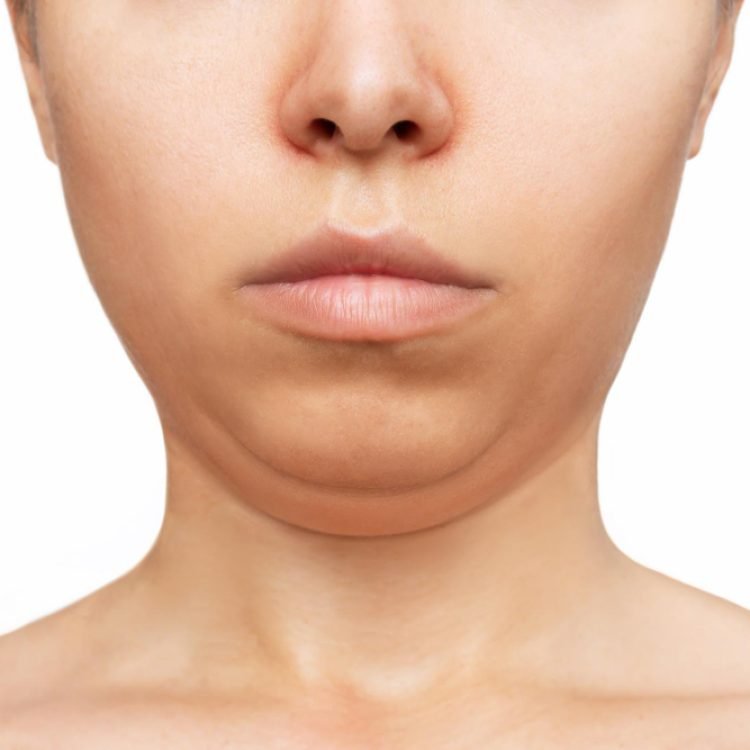
If I lose weight will I lose my double chin? Possibly, partly, and you cannot choose. Fat loss happens across the whole body in an order your genes largely set, so the face may change early, late or barely at all. And if your fullness is jaw and neck structure rather than fat, weight loss will not touch it.
Three separate questions sit inside that one, and the honest answers to all three are less satisfying than the internet suggests.
On this page: Why you cannot target it · Three questions, three answers · What determines whether your face changes · The loose skin problem · When the answer is no · The UK picture · What to ask · FAQs
If I lose weight will I lose my double chin, or can I even aim at it?
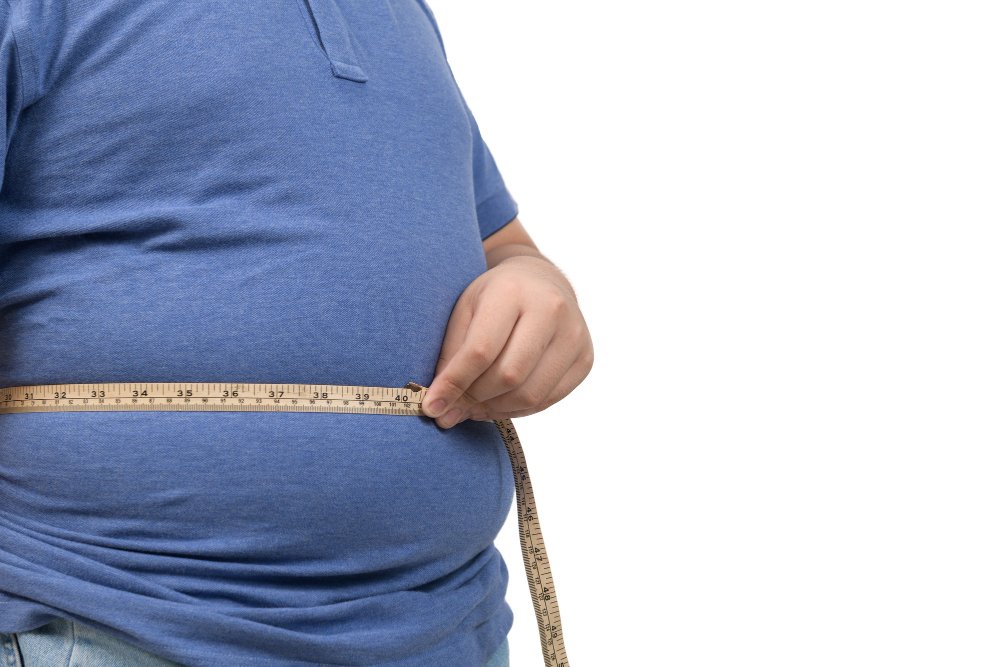
Fat loss is systemic. When your body draws on stored fat, it does so across the whole body rather than from wherever you would prefer.
The idea that exercising a specific area burns fat from that area is called spot reduction, and the research does not support it. The University of Sydney reports that a 2021 meta-analysis of 13 studies involving more than 1,100 participants found localised muscle training had no effect on localised fat deposits. Those studies typically compare a trained limb against the untrained limb on the same person, a design that controls for almost everything, because both limbs share the same body, diet and hormones.
Some individual studies have reported small localised effects, and the picture is not perfectly uniform. But the weight of evidence is that you cannot direct fat loss to your chin, your stomach or anywhere else.
Chin exercises fail for the same reason. Working the muscle underneath does not remove tissue sitting over it.
Three questions hiding inside one
Separating them is what makes the answer useful.
| The question | The honest answer |
|---|---|
| Is any of my double chin fat? | Often yes, partly. Rarely all of it |
| Will weight loss reduce that fat? | Yes, in proportion to overall fat loss, not selectively |
| Will my face be one of the first places I notice it? | Unknown in advance. Genetically determined and varies widely |
The third row is the one that catches people out. Two people can lose the same amount of weight and see completely different results in the face, because the order in which the body draws on different fat stores is largely inherited.
Nobody can look at you and predict this. Anyone offering a confident answer about how your face will change is guessing.
What actually determines whether your face changes
Four things, and you control almost none of them.
How much of the fullness is fat. If a large share is jaw position, chin projection or neck structure, there is less fat available to lose in the first place. The guide to whether a double chin can be prevented sets out the four contributors and which are anatomy.
Your inherited fat distribution. Where your body stores fat, and the order in which it releases it, follows patterns that run in families.
How much overall change occurs. Because loss is proportional rather than targeted, small changes in total body fat produce correspondingly small changes anywhere, including the face.
Your skin’s ability to retract. Which brings up the part almost nobody mentions.
The loose skin problem nobody warns you about
Substantial weight loss can leave skin that does not fully retract, and the neck is one of the places this shows.
Skin elasticity depends on collagen and elastin, and both reduce with age and with cumulative sun exposure. Younger skin generally retracts better than older skin. Larger and faster losses generally leave more slack than smaller, gradual ones.
The uncomfortable implication is that for some people, particularly at older ages or after a large loss, the jawline can end up looking less defined rather than more. Fat has gone, but the skin covering it has not tightened to match.
This is not a reason to avoid losing weight if there are health reasons to do so. It is a reason to be sceptical of any promise that weight loss delivers a sharper jawline, because for a meaningful number of people it does not.
When the answer is simply no
Some situations make weight loss the wrong tool, and being direct about this matters more than being encouraging.
If you are already at a healthy weight. There is little submental fat to lose, so the fullness is likely to be structural. Further weight loss will not reshape bone, and pursuing it for that reason carries real risk without the outcome you want.
If your relatives share the profile at every size. That pattern points to inherited anatomy rather than fat.
If it has looked the same across your own weight changes. If your chin looked like this when you weighed less, weight is not the variable.
One more thing worth saying plainly. If thinking about your weight or your appearance has started to feel hard to control, or if you find yourself eating less than you know you should in order to change how your face looks, that is worth talking to someone about. In the UK, NHS information on eating disorders covers what support exists, and the charity Beat runs a confidential helpline on 0808 801 0677. Speaking to a GP is a reasonable first step and does not commit you to anything.
Weight, double chins and the UK system
Four practical points.
- A GP can tell you which component you have. Whether your fullness is soft tissue or structure is answerable by someone examining you, and that answer determines whether weight loss is even relevant. This costs nothing on the NHS.
- NHS weight management support exists for health reasons, not cosmetic ones. Referral into NHS weight management services is based on clinical criteria rather than how your jawline looks, and thresholds vary between integrated care boards.
- Cosmetic procedures are not NHS-funded. Anything aimed at reshaping the jawline for appearance is classed as cosmetic and is not routinely commissioned. Private medical insurance almost always excludes it too.
- New or one-sided swelling is a different pathway. Firm, new or asymmetric fullness under the chin is not a weight question. UK guidance treats a persistent unexplained neck lump as a reason for prompt GP assessment.
The double chin concern page covers the anatomy in more depth. For detail on self-funded options and what each involves, that sits on Revitalize in Turkey rather than here.
What to ask your doctor
Worth asking a GMC-registered doctor:
- Looking at my neck, how much of this appears to be soft tissue and how much looks structural?
- Is weight loss likely to change what I am seeing, or am I chasing something it cannot fix?
- Are there health reasons, separate from appearance, that would make weight change worth discussing?
- Given my age and skin, is loose skin a realistic consideration if I lose a significant amount?
- Has anything about this area changed in a way you would want to examine?
- If the answer is that this is my anatomy, what does that mean in practice?
Frequently asked questions
How much weight do you have to lose to lose a double chin?
There is no reliable figure, and any source giving you one is inventing it. Fat loss is proportional across the body rather than targeted, and the order in which your face changes is genetically determined. Two people losing identical amounts can see completely different results in the face.
Will my face slim down first or last when I lose weight?
Nobody can predict this for an individual. Some people notice facial changes early in weight loss, others maintain facial fullness until substantial overall loss has occurred. This reflects inherited fat distribution patterns rather than anything you are doing right or wrong.
Can you have a double chin and still be slim?
Yes, and it is common. Chin projection, jaw position, the position of the hyoid bone in the upper neck and skin laxity all shape how defined that area looks, independently of body fat. A soft jawline in a slim person usually reflects anatomy that weight change will not alter.
Do chin exercises help if you are also losing weight?
There is no good evidence that they add anything. Research on localised training consistently finds that working a muscle does not preferentially reduce fat over it. Any change you see during weight loss is likely from the overall loss rather than the exercises, and no UK clinical guidance recommends them.
Could losing weight make my jawline look worse?
It can, for some people. Skin does not always retract fully after substantial fat loss, particularly at older ages or after rapid loss, and loose skin in the neck can soften the jawline rather than sharpen it. This is a genuine possibility rather than a certainty, and it varies considerably between individuals.
Should I lose weight specifically to change my face?
That is a decision to make with a GMC-registered doctor rather than based on an article. Weight change has health implications in both directions, the facial outcome cannot be predicted, and appearance-driven restriction carries real risks. If health reasons exist independently, those are the stronger grounds.