
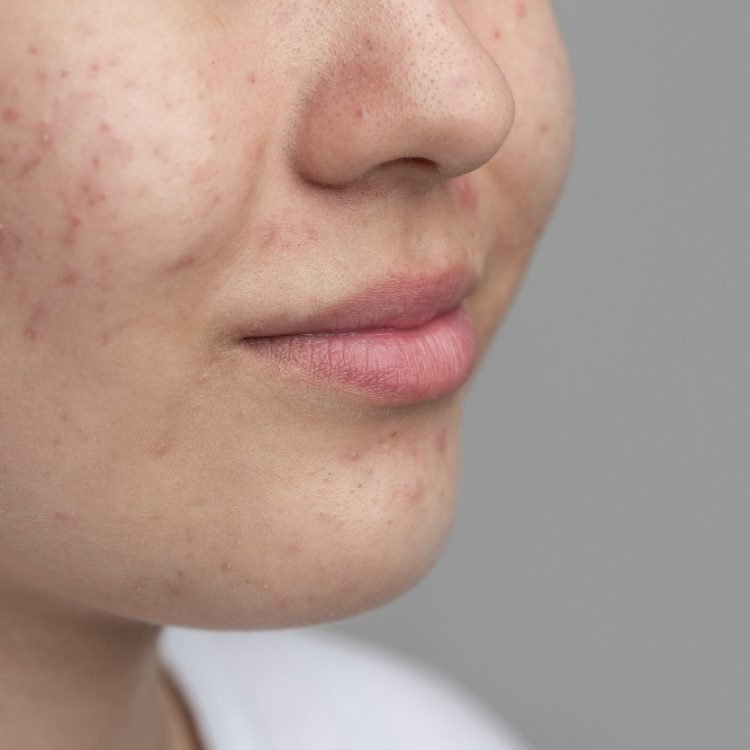
When Should You Do Something About Acne?
When should you do something about acne? Act when spots are inflamed or painful, when marks or scars are starting to form, or when the acne is affecting how you feel, whatever its severity. Occasional non-inflamed spots that do not bother you need no action at all.
Most advice sets one trigger point. UK guidance is built around several, each with its own timeframe, and knowing which you have reached tells you what to do next.
On this page: When waiting is fine · Two thresholds that matter · The UK escalation ladder · How long to give a treatment · Act now, not later · What to ask your doctor · FAQs
When should you do something about acne, and when is waiting fine?
Not every spot needs a plan. The NHS states that about 95% of people aged 11 to 30 are affected by acne to some extent, and that acne often disappears by the mid-20s. Something that common and that self-limiting does not always warrant intervention.
Waiting is reasonable when three things are true at once. The spots are mostly blackheads and whiteheads rather than red, inflamed lesions. Nothing is leaving lasting marks. The acne is not affecting your confidence or mood.
If any one of those three changes, so does the calculation. The useful question is not “how long have I had this” but “which of the three has shifted”.
The two thresholds that matter
Two thresholds sit behind the question of when to act, and confusing them is why people either rush or wait far too long.
The clinical threshold is about physical risk. NICE guideline NG198 states that the risk of scarring increases with the severity and duration of acne, and lists acne that is leading to scarring, and acne with persistent pigmentary changes, among its criteria for referral to a consultant dermatologist-led team. Pigmentary changes means the dark or discoloured marks that inflamed spots can leave behind.
The personal threshold is about how much the acne is costing you. NICE states that acne of any severity can cause psychological distress and mental health disorders, and lists acne of any severity that is causing or contributing to persistent psychological distress as a reason for referral in its own right.
That second point deserves emphasis, because most articles do not license it. Under UK guidance you do not need severe acne to justify acting. Mild acne affecting your daily life is a recognised reason to seek help, not vanity.
The UK escalation ladder
Acting on acne in the UK is not one decision. It is a sequence of gates, each with a defined trigger.
| Where you are now | When to move to the next step | What UK guidance says |
|---|---|---|
| Occasional spots, nothing inflamed, not bothering you | No action needed | NICE recommends treatment based on severity and how much the acne bothers the person, not on presence of spots alone |
| Mild acne, want to try something | Speak to a community pharmacist | Pharmacists advise on over-the-counter options without an appointment, which is often enough for mild acne |
| Over-the-counter products have not helped | Book a GP appointment | NICE sets first-line acne treatment as a 12-week course chosen by severity and patient preference |
| Partway through a GP-prescribed course | Wait for the 12-week review unless something changes | NICE advises reviewing first-line treatment at 12 weeks |
| Two different 12-week courses have not worked | Ask about referral | NICE advises considering referral to a consultant dermatologist-led team if mild to moderate acne has not responded adequately to two different 12-week courses |
| Scars or persistent marks are forming, at any stage | Raise it now, do not wait for the review | NICE lists scarring and persistent pigmentary changes as referral criteria in their own right |
| Sudden severe acne with fever or joint pain | Seek same-day medical advice | NICE advises urgent same-day referral for acne fulminans, to be assessed within 24 hours |
Two terms there need defining. Acne fulminans is a rare, very serious form of acne that comes with whole-body symptoms such as fever and joint pain. A consultant dermatologist-led team is the NHS specialist skin service a GP refers you into.
How long to give a treatment before deciding it has not worked
This is where most people act too early, and it costs months.
NHS prescribing guidance for acne, adapted from NICE NG198, tells clinicians to advise patients that no acne treatment works quickly, and that positive effects can take six to eight weeks to become noticeable. NICE then sets the formal review at 12 weeks.
So a treatment doing nothing at week three is not necessarily failing. Stopping and switching resets the clock and delays the decision that matters.
The exception is side effects. Topical acne treatments commonly cause irritation, and NICE suggests a slower start rather than abandoning treatment. If irritation is severe, raise it before the 12-week mark rather than enduring it silently.
A simple note of when you started and what changed makes the 12-week appointment far more productive than trying to recall it.
Signs that mean act now rather than at the next review
Four situations justify moving faster than the standard timeline.
Scars or persistent marks appearing. Scarring is permanent in a way active acne is not. NICE treats it as a referral criterion, and the guide to whether acne gets worse if left untreated covers what the evidence shows about that risk.
Large, deep, painful lumps. Nodules and cysts sit beneath the skin surface and carry the highest scarring risk of any acne lesion.
Acne affecting your mood, sleep or willingness to go out. NICE is explicit that this counts regardless of how mild the spots look, and advises considering referral to mental health services where a person with acne experiences significant psychological distress.
Sudden severe acne with systemic symptoms. Fever and joint pain alongside a rapid, severe flare is the acne fulminans picture, and it needs same-day advice rather than a routine appointment.
None of these require you to have exhausted anything first.
Timing your decision around NHS waits
The UK pathway has built-in delay, which changes what “acting early” means in practice. Two 12-week courses run 24 weeks before referral is even considered. The NHS standard is then a maximum 18-week wait from referral to the start of consultant-led treatment, though dermatology waits vary widely by trust and the standard is not currently met nationally.
Added together, a first GP appointment can sit more than a year away from a dermatologist appointment. Since NICE links scarring risk to both severity and duration, that queue is itself an argument for starting the process earlier rather than waiting to see whether acne settles on its own.
On private cover, many UK policies exclude chronic and pre-existing conditions, and acne is frequently treated as one or both, so read the wording rather than assuming. For detail on self-funded treatment options and what each involves, that sits on Revitalize in Turkey rather than here. The acne concern page covers what acne is and what drives it.
What to ask your doctor
Worth asking a GMC-registered doctor or pharmacist:
- Which NICE severity grade would you put my acne at today, and what would move it up a grade?
- Can you see any early scarring or pigment change that I have not noticed?
- What specifically should I look for that means I come back before the 12-week review?
- If this course does not work, would you start a referral straight away or try a second course first?
- What are current dermatology waits at my local trust, and does that change your advice on timing?
- I have said the acne is affecting my mood. Does that change what you would recommend?
Frequently asked questions
How long should you wait before seeing a GP about acne?
There is no fixed waiting period in UK guidance. Book sooner if spots are inflamed or painful, if marks or scars are forming, or if the acne is affecting your mood. For mild acne with none of those features, trying over-the-counter products from a pharmacist first is reasonable before making an appointment.
Is mild acne worth treating at all?
It can be. NICE bases treatment decisions on severity and on how much the acne bothers the person, and states that acne of any severity can cause psychological distress. Mild acne that is not troubling you needs no treatment. Mild acne that is affecting your confidence is a recognised reason to seek help.
How do you know when acne is bad enough to see a dermatologist?
UK patients cannot self-refer on the NHS. NICE advises GPs to consider dermatology referral if mild to moderate acne has not responded to two different 12-week courses, if moderate to severe acne has not responded to treatment including an oral antibiotic, or if acne is causing scarring, persistent pigmentary changes or ongoing psychological distress.
What if acne is getting worse while you wait for an appointment?
Contact the GP practice rather than waiting for the scheduled review. Worsening acne, new painful lumps, or marks that are starting to persist are all reasons to be seen sooner. Sudden severe acne accompanied by fever or joint pain needs same-day advice rather than a routine appointment.
Should you treat acne that is already clearing on its own?
Usually there is less to gain, and NICE notes maintenance treatment is not always necessary after acne clears. If marks or early scarring are visible, that is worth raising, because scarring is treated as a referral reason in its own right rather than something to monitor indefinitely.
Does acting early guarantee you will avoid scarring?
No, and no honest source will promise that. NICE links scarring risk to severity and duration, but its own evidence review describes substantial uncertainty in the underlying research. Acting early reduces one known risk factor. It does not remove the possibility of scarring for any individual.