
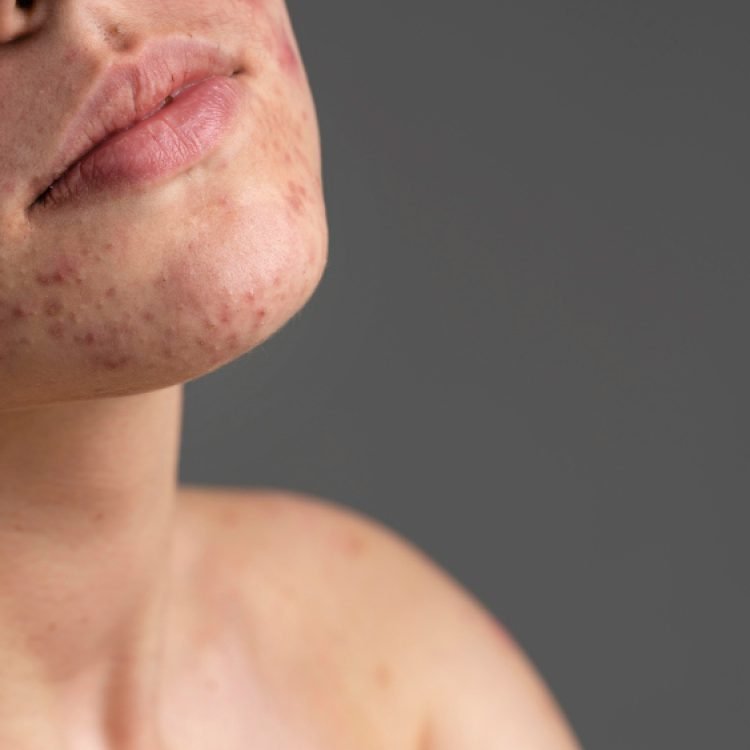
Can Acne Scarring Be Prevented?
Can acne scarring be prevented? Reduced, yes. Eliminated, no. Scarring risk falls when inflamed acne is treated promptly and left alone, but no measure removes the risk entirely. Prevention also has a window: it works while acne is active, and closes once a scar has formed.
Most advice treats every preventive step as equally worthwhile. Some are backed by clinical guidance, some by nothing much, and only one is fully within your control.
On this page: The honest answer · The prevention window · The four levers, ranked · Picking, and why it is harder than it sounds · What does not prevent scarring · The UK picture · What to ask your doctor · FAQs
Can acne scarring be prevented completely?
No, and any source promising otherwise is overreaching. Scarring depends partly on how your skin repairs itself, which you cannot change. A review of acne scar pathogenesis states plainly that the pathogenesis of acne scarring is still not fully understood.
What you can influence is probability. NICE guideline NG198 states that scarring risk increases with the severity and duration of acne, and that persistent picking or scratching of acne lesions can increase that risk. Both are partly modifiable.
How strong is that evidence? NICE’s own evidence review on scarring risk factors found that acne severity and delaying treatment may be risk factors, but described substantial uncertainty because the studies did not control for other influencing factors. The committee still judged the link consistent enough with clinical experience to tell patients about it.
The accurate framing is risk reduction with imperfect evidence behind it, not prevention with a guarantee.
The prevention window closes when the inflammation does
This changes what you should do, and it is missing from most articles on preventing acne scars.
Prevention only operates on lesions that have not yet scarred. Once the skin’s structure has been altered, the question stops being prevention and becomes correction, a different pathway with different options.
Every preventive measure therefore has a deadline set by your acne, not by you. If you have active inflamed acne now, the window is open. If your acne has cleared and you are looking at existing marks, prevention no longer applies to those, though it still applies to future spots.
One consequence: the highest-value preventive action is usually not a product. It is starting effective acne treatment sooner, which shortens the time inflammation has to do damage.
The four levers, ranked by evidence and by how much control you have
Not all preventive measures deserve equal effort.
| Lever | Evidence behind it | How much control you have | Worth prioritising? |
|---|---|---|---|
| Treating inflamed acne promptly | NICE links scarring risk to severity and duration, though its evidence review notes substantial uncertainty | Partial. Depends on GP access and treatment response | Highest. Everything else is smaller |
| Not picking or squeezing | NICE states persistent picking or scratching can increase scarring risk | Full in principle, harder in practice | High, and the only lever entirely yours |
| Avoiding pore-blocking products | NICE advises avoiding oil-based and comedogenic products for acne-prone skin | Full | Moderate. Reduces new lesions rather than acting on scarring |
| Sun protection during treatment | UK guidance advises non-comedogenic sunscreen; several acne treatments raise sun sensitivity | Full | Moderate. Mainly protects against pigmentary marks, not structural scarring |
Comedogenic means an ingredient likely to block pores. Products are often labelled non-comedogenic.
Read that as a ranking, not a checklist. Getting treatment started matters more than any product decision, and no combination of the lower three compensates for leaving inflamed acne untreated for a year.
Picking is the one lever fully yours, and the hardest to pull
NICE names picking as a scarring risk factor, and every article repeats “don’t pick”. Almost none acknowledge that for some people this is not about willpower.
Repeated, compulsive picking at acne lesions has a clinical name. Patient’s professional reference on acne excoriée describes a condition in which people pick at their acne lesions, where picked lesions become scarred and infected, causing itching that leads to further picking. It notes the picking sometimes continues long after the original acne has healed, and that there is no epidemiological information on how common acne excoriée is.
Skin picking of this kind is generally classed within the obsessive-compulsive spectrum rather than as a bad habit. If you have tried to stop and cannot, that is a recognised pattern and a reasonable thing to raise with a GP rather than something to feel embarrassed about.
Steps that reduce opportunity rather than relying on resolve: putting away magnifying mirrors, keeping hands occupied at the times you tend to pick, and covering healing spots. Access is easier to change than impulse.
If picking is frequent, distressing, or continues when there is little acne left to pick, mention it to a GMC-registered doctor. Behavioural approaches exist, and this is not something to work out alone.
What does not prevent acne scarring
Being clear here saves money.
Ordinary skincare products. Cleansers, serums and moisturisers can help manage acne, which indirectly reduces scarring risk. None prevent scar formation in an already-inflamed lesion. Marketing implying otherwise runs ahead of the evidence.
Waiting to see whether acne settles. NICE links scarring risk to duration, so waiting is not neutral for inflamed acne. It is a decision with a cost.
Squeezing a spot “properly”. NHS information advises against squeezing spots or trying to clean out blackheads, because it can make them worse and cause permanent scarring. There is no safe technique.
Sun exposure. UK guidance advises non-comedogenic sunscreen, particularly during acne treatment, because several treatments increase the skin’s sensitivity to sunlight.
Preventing acne scarring as a UK patient
The UK pathway shapes what prevention looks like, because the highest-value lever depends on access.
- A pharmacist is the fastest starting point. Community pharmacists advise on over-the-counter options without an appointment, which often suffices for mild acne and starts the clock earlier.
- GP treatment runs in 12-week blocks. NICE sets first-line treatment as a 12-week course reviewed at 12 weeks, with referral considered if mild to moderate acne has not responded to two different 12-week courses.
- Scarring shortcuts the queue. NICE advises considering referral to a consultant dermatologist-led team if acne is leading to scarring, or if there are persistent pigmentary changes. You do not need to complete both 12-week courses first if scarring is appearing.
- Referral waits still apply. The NHS standard is a maximum 18-week wait from referral to the start of consultant-led treatment, though dermatology waits vary widely by trust and the standard is not currently met.
Prevention also carries more weight in the UK than elsewhere, because NHS treatment for established scarring is generally limited. Most procedures for existing scars are classed as cosmetic and are not routinely commissioned, and criteria vary between integrated care boards. Private cover rarely fills that gap, since many policies exclude both cosmetic procedures and pre-existing conditions.
That asymmetry is the strongest argument for acting on active acne now. For detail on self-funded options for scarring that has already formed, that sits on Revitalize in Turkey rather than here.
The acne scars concern page covers scar types and causes, and the guide to when to do something about acne sets out the trigger points.
What to ask your doctor
Worth asking a GMC-registered doctor:
- Given how my acne looks now, how would you rate my scarring risk compared with an average patient?
- Is anything I am currently doing likely to be raising that risk?
- If preventing scarring is my main priority, does that change which treatment you would start?
- I struggle to stop picking. What support is available for that?
- At what point would scarring risk alone justify a referral in my case?
- Are there early changes on my skin now that suggest prevention has already been partly overtaken?
Frequently asked questions
Can acne scarring be prevented entirely?
No. Scarring depends partly on how individual skin repairs itself, which cannot be changed, and the underlying process is not fully understood. Treating inflamed acne promptly and not picking both reduce the risk, according to NICE guidance, but neither removes it. Any source promising scar-free outcomes is overstating the evidence.
Does treating acne early prevent scars?
It reduces the risk rather than preventing scars outright. NICE links scarring risk to both the severity and duration of acne. Its own evidence review noted substantial uncertainty in the underlying studies, and judged that delayed treatment may not necessarily lead to scarring in mild to moderate acne, while mattering more in severe acne.
Is there a safe way to squeeze a spot?
No. NHS information advises against squeezing spots or trying to clean out blackheads, because doing so can make acne worse and cause permanent scarring. There is no technique that removes the risk. Covering a healing spot reduces the temptation and the opportunity more reliably than attempting careful extraction.
What if I cannot stop picking my skin?
Repeated compulsive picking at acne has a clinical name, acne excoriée, and is generally classed within the obsessive-compulsive spectrum rather than as a habit. It is a reasonable thing to raise with a GP. Behavioural approaches exist, and reducing opportunity, such as removing magnifying mirrors, is often more effective than relying on willpower.
Do skincare products prevent acne scarring?
Not directly. Products that help control acne indirectly lower scarring risk by reducing inflamed lesions. NICE advises avoiding oil-based and comedogenic products for acne-prone skin. No cleanser, serum or cream has been shown to stop a scar forming in a lesion that is already inflamed, whatever the packaging suggests.
Is it too late to prevent scarring if I already have scars?
Existing scars are permanent without intervention, but prevention still applies to every future inflamed spot. Scarring risk is lesion by lesion rather than all-or-nothing. Treating active acne and not picking continue to reduce the chance of additional scars, regardless of what has already formed.