Consultations in London & Manchester | Treatment in Izmir, Turkey | Caring for UK patients since 2005

SKIN CONCERN

Moles

Also called: mole, moles, skin tag, skin tags, lesion, cyst, lump on skin
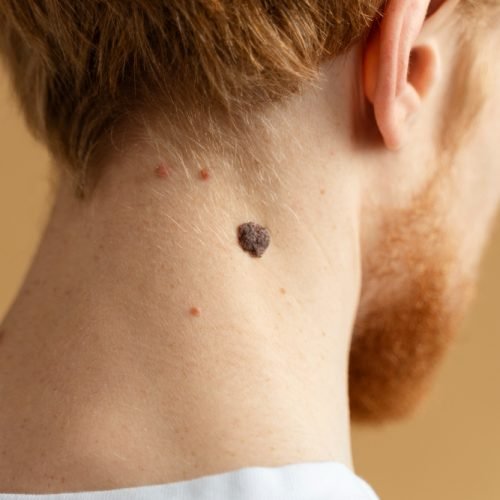
Moles are common skin growths that can vary in size, shape, colour, and appearance. Most are harmless, but new or changing moles should be monitored and medically assessed when unusual changes occur.
moles

TYPICALLY OCCURS

With genetics, sun exposure, hormonal changes, and natural skin development.

TREATED BY

Monitoring, surgical removal, shave excision, and more.

 ALSO LINKED TO

Why it happens?

Moles develop when pigment-producing cells called melanocytes grow together in clusters rather than being evenly distributed throughout the skin. They may be present from birth or develop gradually during childhood, adolescence, and early adulthood.

Genetics plays an important role in how many moles a person develops, while sun and ultraviolet (UV) exposure can influence their number and appearance. Hormonal changes, such as those occurring during puberty or pregnancy, may also cause existing moles to become darker or more noticeable.

Most moles are benign and remain stable for many years. However, a new or changing mole can sometimes be a sign of melanoma or another skin condition. Moles that change in size, shape, colour, or texture, or begin to itch, bleed, or look noticeably different from others, should be medically assessed.

How far along is it?

01

Early

The mole has a consistent size, shape, and colour, with no noticeable changes or symptoms.

02

Moderate

The mole begins to change in size, shape, colour, texture, or elevation, or starts to look different from other moles.

03

Advanced

The mole shows significant or rapid changes, irregular borders or colours, bleeding, crusting, persistent itching, or other unusual features and should be medically assessed promptly.

What addresses it?

Treatments that address this

It is worth seeking medical advice when a mole is new, changing in size, shape, colour, or texture, or becomes itchy, painful, crusted, or starts bleeding. A mole that looks noticeably different from your others or changes rapidly should also be assessed promptly by a healthcare professional.

Quick Questions:

01

What causes moles?

Moles develop when pigment-producing cells called melanocytes grow in clusters. Genetics, natural skin development, sun exposure, and hormonal changes can influence their number and appearance.

02

How do I know if a mole is concerning?

Look for changes in size, shape, colour, or texture, irregular borders, multiple colours, bleeding, itching, or a mole that looks noticeably different from your others. Any suspicious change should be medically assessed.

03

Can a normal mole turn into melanoma?

Most moles remain harmless and do not become melanoma. However, melanoma can sometimes develop within an existing mole, which is why new or changing moles should be checked.

04

Can moles be removed?

Yes. Moles can be removed when medically necessary or for cosmetic reasons after appropriate assessment. Depending on the mole, removal may involve surgical excision or shave excision, with tissue sometimes sent for laboratory examination.

Related Guides

Need More Information?

Contact us to find out more about concerns and our treatment options with aftercare packages.