Can You Fix Bingo Wings by Exercising?
Can you fix bingo wings by exercising? Partly. Exercise builds the triceps muscle underneath, which changes the shape of the upper arm. It does not remove fat from that specific area, and it does nothing for loose skin. Which of those three you are actually looking at decides whether exercise helps.
The arm responds to training better than most areas people worry about. It still cannot do two of the three jobs.
On this page: Three components · What exercise does · What it cannot do · Why the arm is different · When it is not fat or skin · The UK picture · What to ask · FAQs
Can you fix bingo wings by exercising, or only part of the problem?
Only part, and the useful first step is working out which part you have.
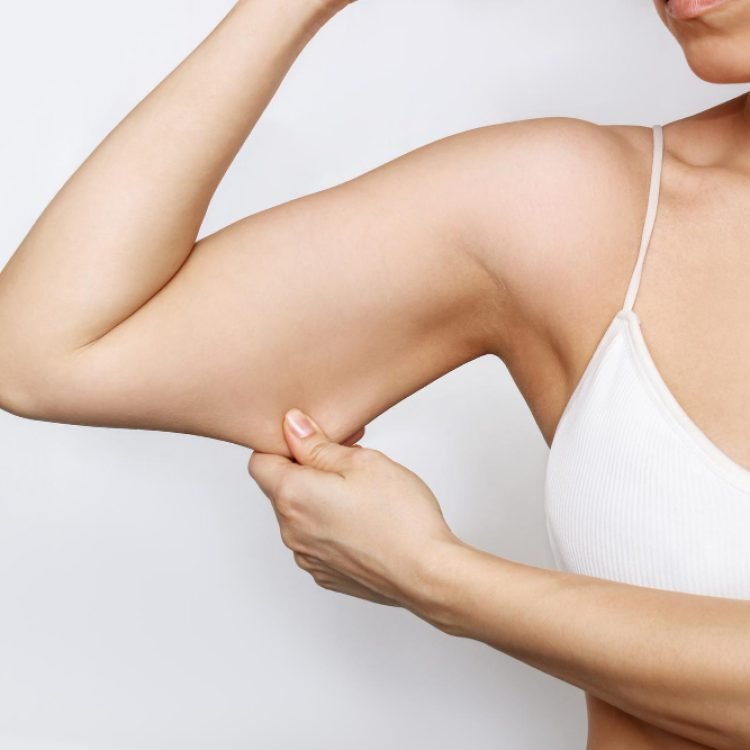
Fullness or looseness at the back of the upper arm comes from three things, usually in combination.
| Component | Does exercise change it? | What does |
|---|---|---|
| Triceps muscle | Yes. This is what resistance training builds | Progressive resistance training |
| Subcutaneous fat | Not locally. Only as part of overall body composition change | Overall body composition, not targeted work |
| Loose or stretched skin | No | Nothing available without intervention |
Subcutaneous fat is the fat layer sitting directly under the skin. The triceps is the muscle running along the back of the upper arm.
“Bingo wings” is a nickname rather than a medical term, and not a diagnosis. It describes where tissue sits, and it is applied almost exclusively to women, which is worth noticing when you are deciding how much it should bother you.
The bingo wings concern page covers the anatomy in more detail.
What exercise genuinely does
Resistance training builds the triceps. That is a real, measurable change, and it alters the shape and firmness of the upper arm.
For someone whose arms are mostly muscle and a modest amount of fat, with skin that has not been significantly stretched, training can make a visible difference. That is a genuine outcome and worth saying plainly, because a lot of content dismisses exercise entirely.
Two secondary effects are worth knowing. Regular resistance training contributes to overall body composition, which reduces fat everywhere including the arms. And it improves what the arm can do, which matters more with age than how it looks.
None of that is targeted at the arm specifically. The arm changes because your whole body composition changes, plus the muscle underneath grows.
What exercise cannot do
Two things, and they are the two most people are actually asking about.
It cannot remove fat from one area. Training a specific muscle does not burn fat sitting over that muscle. The University of Sydney reports that a 2021 meta-analysis of 13 studies involving more than 1,100 participants found localised muscle training had no effect on localised fat deposits. Those studies typically train one limb and compare it with the untrained limb on the same person, which controls for diet, hormones and everything else.
Arm exercises for arm fat fail for the same reason chin exercises fail for a double chin, covered in the guide to whether losing weight removes a double chin.
It cannot tighten stretched skin. Skin that has been significantly stretched, by weight change or by time, does not retract in response to muscle work underneath it. Skin elasticity declines with age and with cumulative sun exposure.
There is an outcome worth preparing for. Building muscle beneath loose skin can make the arm feel firmer while looking much the same, and occasionally makes the contrast between a firmer upper surface and a looser underside more obvious. That is not a sign of doing it wrong.
Why the arm responds better than most areas
This is the part usually missed, and it is why blanket dismissal of exercise is wrong here.
The upper arm contains a substantial muscle sitting directly under the area people are unhappy with. Most other commonly disliked areas do not. There is no meaningful muscle to build under a double chin or an abdominal skin fold.
So exercise does more for the upper arm than it does for most concerns, while still being unable to do the two things people hope for. Both halves of that are true, and content that picks only one is misleading.
The practical translation: if your arms are largely muscle and fat with reasonably elastic skin, training is worth your effort. If a substantial part is loose skin after significant weight loss or with age, exercise will improve strength and shape without changing the thing that bothers you.
When it is not fat or skin at all
One situation matters more than everything else on this page, and cosmetic content almost never mentions it.
Swelling of one arm can be lymphoedema, a build-up of lymph fluid that occurs when lymph drainage is damaged. It is most commonly associated with breast cancer treatment where lymph nodes have been removed or the armpit has been treated with radiotherapy.
NHS patient information from Hull University Teaching Hospitals lists common symptoms including swelling of the arm which may include the hand and fingers, a feeling of tightness and heaviness, discomfort and fullness in the tissues, pins and needles, and aching in the arm or shoulder. It notes lymphoedema can appear immediately after surgery, or months or years later.
Macmillan Cancer Support advises having any swelling in the hand, arm, chest or breast checked, and notes the earlier lymphoedema is diagnosed, the more straightforward treatment is.
Two things follow. Swelling affecting one arm, particularly with heaviness, tightness or rings and sleeves becoming tighter, is a GP or cancer team question rather than a gym question. And if the area becomes red, hot or painful, or you develop a fever, that suggests infection and needs same-day medical attention.
If you have lymphoedema or are at risk of it, exercise advice differs and should come from your lymphoedema specialist rather than a general programme.
Bingo wings and the UK system
Three points.
- Nothing here is NHS-funded for appearance. Procedures to remove upper arm skin are classed as cosmetic and are not routinely commissioned.
- Even after major weight loss, arms rank lower than the abdomen. NHS commissioning guidance notes that for body contouring after massive weight loss, the functional and cosmetic gains for arms, thighs and buttocks are generally considered much less than for the abdomen, so funding is correspondingly less likely.
- Lymphoedema is a different pathway entirely. NHS lymphoedema services exist, assess and treat, and referral usually comes through a GP, breast care nurse or cancer team.
Because anything cosmetic would be self-funded, there is no clinical deadline. For detail on self-funded options and what each involves, that sits on Revitalize in Turkey rather than here.
What to ask your doctor
Worth asking a GMC-registered doctor or a registered physiotherapist:
- Looking at my arms, how much of this appears to be fat, muscle and skin?
- Is there any asymmetry here that you would want to examine rather than attribute to appearance?
- Given my history, is lymphoedema something I should be watching for?
- Is resistance training appropriate for me, given any other conditions I have?
- If a large part of this is loose skin, is training likely to change what bothers me?
- Is there anything here that is medical rather than cosmetic?
Frequently asked questions
Do arm exercises get rid of arm fat?
Not locally. Research on localised training consistently finds that working a muscle does not reduce fat sitting over it. A meta-analysis of 13 studies involving more than 1,100 participants found no effect of localised muscle training on localised fat. Arm fat reduces alongside overall body composition rather than in response to arm-specific work.
How long does it take to see a change from arm exercises?
There is no reliable figure, and it depends heavily on what your arms are made of. Muscle changes are generally noticeable over months rather than weeks with consistent training. If a large share of what bothers you is loose skin, the timeline is irrelevant because training does not address that component.
Can loose arm skin tighten with exercise?
No. Skin that has been significantly stretched does not retract in response to muscle work underneath it. Building the triceps can make the arm feel firmer while looking similar. Skin elasticity declines with age and cumulative sun exposure, and no exercise reverses that.
Are bingo wings caused by weak muscles?
Not usually. The appearance is generally a combination of subcutaneous fat and skin laxity rather than muscle weakness, which is why strengthening alone often disappoints. Muscle contributes to shape, but the tissue sitting over it determines much of what people are unhappy about.
When should arm changes be checked by a doctor?
When swelling affects one arm rather than both, when there is heaviness, tightness, aching or pins and needles, or when rings and sleeves start feeling tighter. Those can indicate lymphoedema, particularly after breast cancer treatment. Redness, heat, pain or fever suggests infection and needs same-day attention.
Is exercise safe if I have lymphoedema?
Exercise is generally considered beneficial, but advice should come from a lymphoedema specialist rather than a general programme, because unsuitable loading can worsen swelling. If you have lymphoedema or are at risk after cancer treatment, ask your specialist nurse or physiotherapist before starting resistance training.