Consultations in London & Manchester | Treatment in Izmir, Turkey | Caring for UK patients since 2005

FACE CONCERN

Eye Bags

Also called: eyebags, eye bags, bags under eyes, puffy eyes, tired eyes, dark circles, panda eyes, permanently tired, bags, heavy under eyes
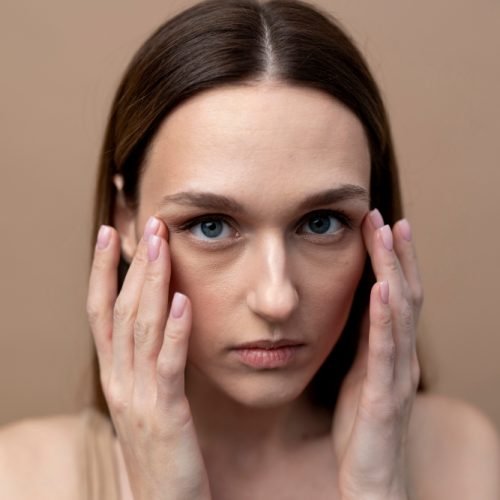
Eye bags are the puffiness or bulging that develops beneath the lower eyelid, usually as the tissue supporting the fat around the eye weakens with age. Some are fluid that settles by mid-morning; others are structural and stay put all day.
eye bags

TYPICALLY OCCURS

Mid-thirties onward, earlier if it runs in the family

TREATED BY

Support around the eye weakens; fat shifts forward

 ALSO LINKED TO

Why it happens?

Eye bags form because the structures holding the eye in place gradually give way.

Fat sits in small pockets around the eyeball, cushioning it. A thin sheet of tissue called the orbital septum holds that fat in position. With age, the septum weakens and the fat pushes forward against the lower lid, producing a bulge. At the same time the skin beneath the eye, the thinnest on the body, loses collagen and elastin, and the muscle ringing the eye slackens. Nothing is going wrong; this is ordinary ageing tissue behaving as ageing tissue does.

Genetics set the timetable. Some families develop visible under-eye fullness in their twenties, decades before the age-related version would appear. If your parents have it, you are more likely to, and earlier.

Fluid is the other half of the picture, and it behaves completely differently. Lying flat overnight allows fluid to pool in the loose tissue under the eye, which is why puffiness is often worst on waking. Salt, alcohol, crying, hay fever and disturbed sleep all increase it. This kind of swelling drains once you are upright and moving.

Ultraviolet exposure and smoking both accelerate the skin and collagen side of the change. Neither affects the fat pads or the septum.

A hollow beneath the eye can also cast a shadow that reads as a bag when the tissue itself is normal.

How far along is it?

01

Early

Puffiness on waking that has settled by mid-morning. No bulge in the afternoon, and none in photographs taken later in the day. Worse after salt, alcohol, poor sleep or hay fever. The tissue itself is unchanged; only fluid is moving.

02

Moderate

A soft fullness that no longer fully settles. Still worse in the morning, but something remains by evening, particularly in overhead light. A faint groove may appear where the lid meets the cheek. Often first noticed in photographs rather than mirrors.

03

Advanced

A defined bulge present morning and night, unchanged by sleep or fluid. The groove beneath it is clearer, the skin above thinner and looser, and the lid-to-cheek transition longer. Stable rather than worsening quickly, and no longer a fluid question.

What addresses it?

There is no clinical deadline. Eye bags are a normal feature of an ageing face, not a condition, and leaving them alone costs you nothing medically.

Quick Questions:

01

At what age do eye bags start?

Most people notice them from their mid-thirties onward, though the hereditary form can appear in the twenties or even late teens. Timing depends largely on genetics and cumulative sun exposure rather than anything you have done. Family resemblance is the best available predictor of when yours will show.

02

How do I know if my eye bags are fluid or permanent?

Check them twice: on waking and again two to three hours after getting up. Fluid puffiness visibly reduces in that window as it drains once you are upright. A bulge that measures the same at both checks is structural fat, and sleep, cold compresses and caffeine creams will not shift it.

03

Can eye bags be prevented?

Only partly, and mainly the skin component. Sun protection and not smoking slow collagen loss, which affects one of three contributing layers. The orbital septum weakening and fat position are age and genetics, and no evidence supports preventing those. Managing salt, alcohol and allergies reduces the fluid half.

04

What addresses eye bags surgically?

Eye bags can be addressed by a series of procedures including muscle tightening, skin removal, fat pad removal or fat injection depending on the patient’s specific case.

Related Guides

Need More Information?

Contact us to find out more about concerns and our treatment options with aftercare packages.