
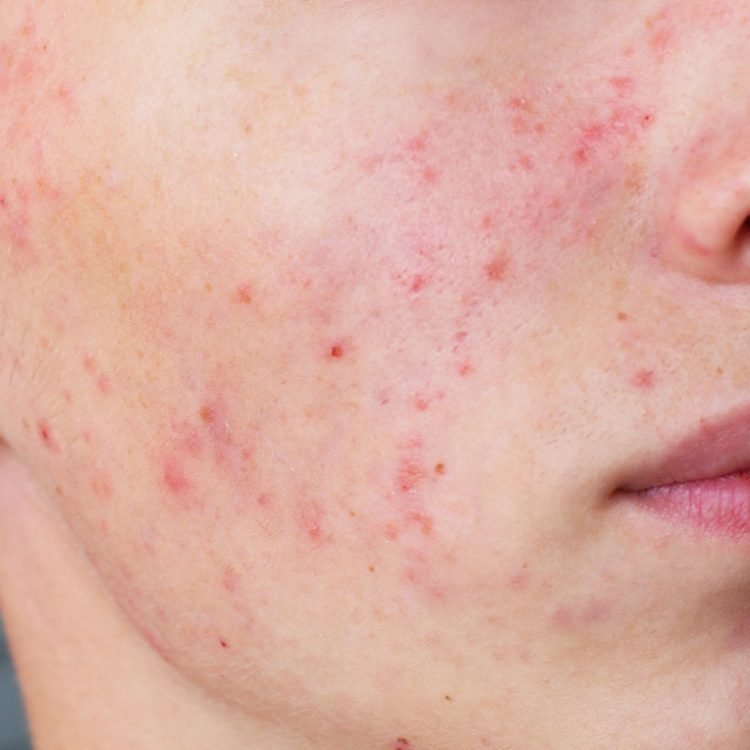
Does Acne Get Worse If Left Untreated?
Does acne get worse if left untreated? Sometimes, but not always. Much acne settles on its own, and NHS information says acne often disappears when a person reaches their mid-20s. The genuine risk of leaving acne untreated is scarring, and that risk tracks severity far more closely than time alone.
Most advice on untreated acne implies that waiting always makes things worse. UK guidance is more careful than that, and so is this guide.
On this page: Does untreated acne settle on its own? · What changes if you wait · What the evidence says about scarring · Severity matters more than time · The UK waiting problem · What to ask your doctor · FAQs
Does untreated acne settle on its own?
Often, yes. The NHS states that most people have acne on and off for several years before symptoms start to improve as they get older, that acne often disappears when a person is in their mid-20s, and that about 3% of adults have acne over the age of 35.
So untreated acne is not a condition that reliably escalates. For many people it runs a few years and fades, as the acne concern page explains. The question worth asking is not whether acne will go, but what it leaves behind.
Acne itself is temporary for most people. Scarring is not. That asymmetry is the whole argument for treating rather than waiting, and it is a different argument from “acne gets worse if you ignore it”.
What actually changes if you leave acne untreated
Three things can change while acne goes untreated, and they carry different weights.
Scarring. NICE guideline NG198 states that the risk of scarring increases with the severity and duration of acne. Scars are permanent in a way active spots are not.
Pigmentation changes. Inflamed spots can leave dark or discoloured marks after they heal. NICE lists acne with persistent pigmentary changes among its criteria for referral to a consultant dermatologist-led team, which indicates these are treated as a clinical concern rather than a cosmetic afterthought.
Psychological effect. NICE NG198 states that acne of any severity can cause psychological distress and mental health disorders, and lists acne of any severity causing or contributing to persistent psychological distress as a reason for referral. Severity of spots and severity of distress are not the same thing, and NICE is explicit about that.
What generally does not happen is acne turning into something else. Untreated acne does not become a different condition. It stays acne, and for most people it eventually recedes.
What the evidence actually says about untreated acne and scarring
This is where honest reporting matters, because the usual claim is stated with more confidence than the research supports.
NICE commissioned an evidence review on risk factors for scarring due to acne vulgaris as part of NG198. Its conclusion is carefully worded. The evidence suggests that acne severity and delaying treatment may be risk factors for scarring, but there is substantial uncertainty, because the studies did not control for other influencing factors. The NICE committee agreed the link was consistent with clinical experience and thought people should be told about it, while prioritising the topic for further research.
The committee also made a distinction that rarely reaches patient-facing articles. It interpreted the evidence as meaning delayed treatment may not necessarily lead to scarring in mild to moderate acne, but would be more of a risk when severe acne is not treated quickly enough.
Read plainly: “untreated acne scars” is too broad a statement. “Untreated severe acne carries a meaningful scarring risk” is closer to what the evidence supports, and NICE itself flags that the underlying research is limited.
Severity matters more than time
Because scarring risk is severity-dependent, the useful question is not how long you have had acne but what grade it is now. NICE NG198 defines the grades by lesion count.
| Acne grade (NICE NG198) | What that means | What leaving it untreated tends to mean |
|---|---|---|
| Mild to moderate | Any number of comedones, up to 34 inflammatory lesions, up to 2 nodules | NICE’s evidence review notes delayed treatment may not necessarily lead to scarring at this grade. Waiting is a reasonable choice if it is not bothering you |
| Moderate to severe | 35 or more inflammatory lesions, or 3 or more nodules | Higher scarring risk. NICE treats delay as more of a risk when severe acne is not treated quickly enough |
| Any grade, already scarring | Visible scars or persistent pigmentary changes forming | NICE lists both as referral criteria. Waiting adds risk without adding information |
| Any grade, causing distress | Acne affecting mood, confidence or daily life | NICE states acne of any severity can cause psychological distress, and lists persistent distress as a referral reason regardless of grade |
Two terms in that table are worth defining. Comedones are blackheads and whiteheads, the non-inflamed blocked follicles. Nodules are the large, hard, often painful lumps that build up beneath the skin surface.
A practical reading of the table: if your acne is mild, not scarring and not upsetting you, watching and waiting is a defensible decision rather than a failure. If any of the other three rows describe you, waiting has a cost.
Leaving acne untreated in the UK is often not a choice
For UK patients, “untreated” frequently means “waiting”, not “deciding”. The timeline is worth understanding before you plan around it.
- A pharmacist is the fastest route. Community pharmacists advise on over-the-counter options without an appointment, which is often enough for mild acne.
- First-line GP treatment runs 12 weeks. NICE NG198 sets a 12-week first-line course, reviewed at 12 weeks.
- Referral follows two failed courses. NICE advises considering referral to a consultant dermatologist-led team if mild to moderate acne has not responded adequately to two different 12-week courses, or if acne is leading to scarring or persistent pigmentary changes.
- Then the queue. The NHS standard is a maximum 18-week wait from referral to the start of consultant-led treatment. Dermatology waits vary widely by trust, and the standard is not currently met nationally.
Add those together and a first GP appointment can sit more than a year away from a dermatologist appointment. Since scarring risk rises with severity and duration, the delay built into the pathway is itself a reason to start early rather than wait to see whether acne settles.
One exception runs on a different clock. NICE advises urgent same-day referral for acne fulminans, a very serious form of acne with systemic symptoms such as fever and joint pain, to be assessed within 24 hours. That is rare, but it is not a wait-and-see situation.
On private cover, many UK private medical insurance policies exclude chronic and pre-existing conditions, and acne is frequently treated as one or both. Read the policy wording rather than assuming. If you want detail on self-funded treatment options and what they involve, that sits on Revitalize in Turkey rather than on this site.
Timing matters here too, because onset age shapes how long acne is likely to run. That is covered in the guide to what age acne usually starts.
What to ask your doctor
Worth asking a GMC-registered doctor or pharmacist:
- Which NICE grade is my acne now, and does that change the case for treating rather than waiting?
- Can you see any early scarring or pigmentary change that I might not have noticed?
- If I choose to wait, what specifically should make me come back sooner?
- Given local dermatology waits, when would you start a referral if treatment does not work?
- Is the risk of scarring in my case high enough to outweigh the side effects of treating?
- If my acne is already settling on its own, is there anything worth doing to protect against marks?
Frequently asked questions
Does acne get worse if left untreated for years?
Not necessarily. NHS information says acne often improves as people reach their mid-20s, so long-standing acne frequently settles without treatment. The concern with years of untreated acne is cumulative scarring risk, which NICE links to both severity and duration, while noting the underlying evidence carries substantial uncertainty.
Will untreated acne always cause scars?
No. NICE’s evidence review on scarring found that delayed treatment may not necessarily lead to scarring in mild to moderate acne, though it is more of a risk when severe acne is not treated promptly. Scarring is also linked to picking and scratching, which is one factor within your own control.
Is it safe to just wait and see with mild acne?
It can be a reasonable choice if the acne is mild, not scarring and not affecting your mood. NICE does not recommend treating every case regardless of grade. Book an appointment if spots become painful or inflamed, marks start persisting, or the acne begins bothering you.
Does untreated acne turn into something worse?
Acne does not become a different condition if untreated. It can increase in severity, and severe untreated acne carries a higher scarring risk. One rare exception is acne fulminans, a severe form with systemic symptoms, which NICE says needs same-day referral and assessment within 24 hours.
How long before untreated acne causes permanent damage?
No UK guidance gives a threshold, because the evidence does not support one. NICE states that scarring risk increases with both severity and duration, without naming a point of no return. Grade of acne, whether marks are already forming, and picking behaviour matter more than any fixed timeframe.
Should you treat acne that is already clearing on its own?
Usually there is less to gain. NICE notes maintenance treatment is not always necessary after acne clears. If marks or early scarring are visible, that is worth raising, because scarring is treated as a referral reason in its own right rather than something to monitor indefinitely.