
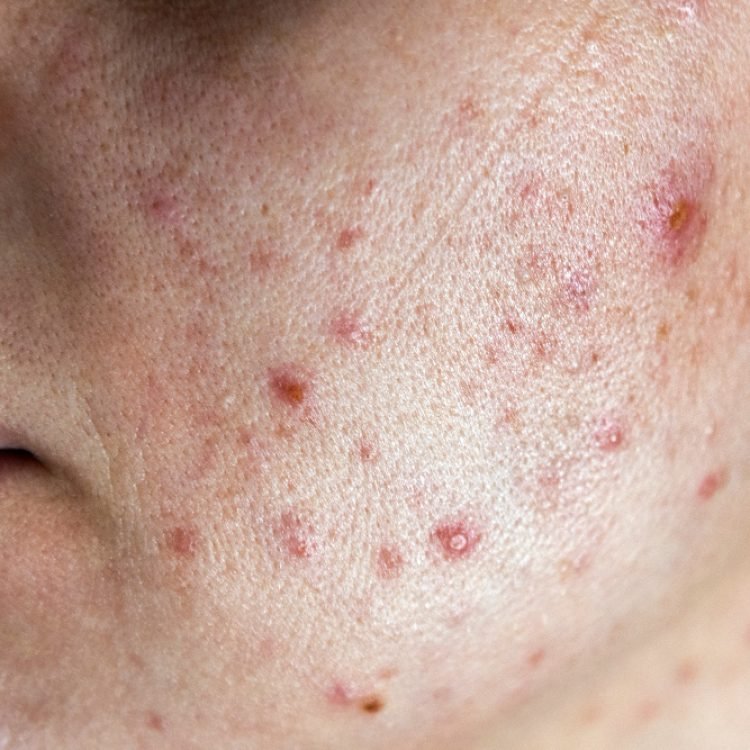
Can Acne Be Prevented? What the UK Evidence Actually Supports
Can acne be prevented? Not reliably. Acne is driven mainly by hormones and inherited traits, and no routine has been shown to stop it developing. What you can influence is how severe acne becomes, how often it flares, and whether it leaves scars. That distinction changes what is worth your effort.
Most prevention advice blurs those two things together. This guide separates them, using what NICE and the NHS say, and flags where the evidence runs out.
On this page: The honest answer · What you can influence · What the evidence supports · What it does not support · Preventing scarring · The UK picture · What to ask your doctor · FAQs
Can acne be prevented completely?
No. The main drivers of acne are not things you can change. During puberty, androgen levels rise and make the skin’s sebaceous glands larger and more active, producing more sebum, the oil that keeps skin and hair lubricated. Whether that process leads to acne is heavily influenced by family history. The NHS notes that acne runs in families, and that about 95% of people aged 11 to 30 are affected to some extent.
No published UK guidance recommends a preventive routine for people who do not yet have acne. That absence is meaningful: if a reliable prevention strategy existed, NICE would have recommended it.
What UK guidance does cover is how to look after acne-prone skin so existing acne is not made worse. That is a different goal, and a reachable one. The acne concern page sets out the underlying causes in full.
What you can actually influence
Can acne be prevented at each stage? Three separate outcomes sit behind that question, and lumping them together is why so much prevention advice feels useless.
Whether acne appears at all. Largely outside your control, and determined by puberty timing, hormones and genetics.
How bad it gets and how often it flares. Partly influenceable, mainly through skin care choices and by treating acne early rather than waiting.
Whether it scars. The most influenceable of the three, and the one with the clearest guidance behind it. NICE guideline NG198 states that persistent picking or scratching of acne lesions can increase the risk of scarring, and that the risk of scarring increases with the severity and duration of acne.
If you only act on one thing, act on the third. Acne clears. Scars are far harder to shift.
What the evidence supports
The table below sets out the skin care measures named in NICE guideline NG198 and NHS patient information, alongside what each realistically achieves.
| Measure | What UK guidance says | What it realistically does |
|---|---|---|
| Cleanse twice daily with a non-alkaline synthetic detergent product | NICE NG198 advises this | Cleans without stripping skin. Not shown to prevent acne appearing |
| Avoid oil-based and comedogenic moisturisers and sunscreens | NICE NG198 advises this | Reduces pore blockage, so fewer new blocked follicles |
| Avoid oil-based and comedogenic make-up, and remove make-up at the end of the day | NICE NG198 advises this | Same effect as above, applied to cosmetics |
| Do not pick or scratch spots | NICE NG198 states persistent picking or scratching increases scarring risk | Lowers the chance of permanent scarring |
| Do not scrub or try to clean out blackheads | NHS advises against squeezing spots or cleaning out blackheads | Avoids irritation and permanent scarring |
| Follow a specific diet | NICE NG198 states there is not enough evidence to support specific diets for treating acne | Unproven for acne. A balanced diet is worth having regardless |
Comedogenic means an ingredient likely to block pores; products are often labelled non-comedogenic. A synthetic detergent or syndet cleanser is a soap-free wash formulated at a pH close to skin’s own, roughly neutral to slightly acidic, rather than the higher pH of ordinary soap.
Notice what the supported list has in common. Every item is about not making acne worse. None of them claim to stop acne starting.
What the evidence does not support
Being clear here saves money and frustration.
Specific diets. NICE NG198 advises people that there is not enough evidence to support specific diets for treating acne. That covers the popular candidates, including dairy-free and low glycaemic load approaches. NICE points people to a normal balanced diet instead. “Not enough evidence” is not the same as “proven not to work”, and dietary research in acne is genuinely unsettled. But there is no basis for telling you to cut a food group.
Washing more often or more aggressively. NHS-published information notes there is no evidence that poor hygiene causes acne. Over-washing and scrubbing tend to irritate skin rather than clear it.
Sun exposure as a treatment. Several acne treatments increase sensitivity to sunlight, and UK guidance advises using non-comedogenic sunscreen rather than skipping sun protection.
Toothpaste, lemon juice and similar home remedies. No UK clinical guidance supports these, and they commonly cause irritation.
Skipping moisturiser because skin is oily. NICE guidance assumes people with acne use moisturisers, and advises choosing non-comedogenic ones.
Preventing acne scarring is the goal that matters most
Scarring is where prevention genuinely works, and it is the part most articles on preventing acne underplay.
Two statements from NICE guideline NG198 are worth holding onto. Persistent picking or scratching of acne lesions can increase the risk of scarring. The risk of scarring also increases with the severity and duration of acne.
Read together, those point to a practical conclusion: leaving moderate acne untreated for a year is itself a scarring risk, not a neutral wait-and-see. If acne is inflamed, painful or already leaving marks, getting treatment started matters more than any product choice.
NICE also treats scarring as a referral reason in its own right, listing acne that is leading to scarring, and acne with persistent pigmentary changes, among its criteria for referral to a consultant dermatologist-led team.
Preventing acne flares as a UK patient
Three parts of the UK system shape what prevention looks like in practice.
- A pharmacist is the fastest first step. Community pharmacists can advise on over-the-counter options and non-comedogenic products without an appointment, which is often enough for mild acne.
- The GP pathway runs slowly by design. NICE NG198 sets first-line acne treatment as a 12-week course, reviewed at 12 weeks. If mild to moderate acne has not responded adequately to two different 12-week courses, NICE advises considering referral to a consultant dermatologist-led team.
- Then there is the wait. The NHS standard is a maximum 18-week wait from referral to the start of consultant-led treatment, though dermatology waits vary widely by trust and the standard is not currently met nationally.
The arithmetic is the point. Two 12-week courses plus a referral wait can mean well over a year between your first GP appointment and seeing a dermatologist. Since scarring risk rises with duration, the most useful preventive step available to a UK patient is starting that clock early rather than waiting to see whether acne settles.
On private cover, many UK private medical insurance policies exclude chronic and pre-existing conditions, and acne is frequently treated as one or both. Check the policy wording rather than assuming. Where you want detail on self-funded treatment options, that sits on Revitalize in Turkey’s acne treatment pages rather than here.
What to ask your doctor
Take specific questions to a GMC-registered doctor or pharmacist:
- Given the grade of acne I have now, what is my realistic scarring risk if we wait rather than treat?
- Are any of my current skincare, make-up or sunscreen products likely to be making this worse?
- Which products should I stop using while I am on treatment, and which should I keep?
- How will we tell at 12 weeks whether this is working, and what happens if it is not?
- Is anything in my medical history or medication likely to be contributing to flares?
- If my acne clears, would you recommend maintenance treatment in my case, or not?
Frequently asked questions
Can acne be prevented with diet?
NICE guideline NG198 advises there is not enough evidence to support specific diets for treating acne, and points people towards a normal balanced diet instead. That includes dairy-free and low glycaemic load approaches. Research in this area is unsettled rather than settled against diet, so no UK guidance recommends cutting foods to control acne.
Does washing your face more often prevent spots?
No. NHS-published information notes there is no evidence that poor hygiene causes acne. NICE advises cleansing acne-prone skin twice daily with a non-alkaline, soap-free product. Washing more often than that, or scrubbing, tends to irritate the skin and can make acne look worse rather than better.
Can you stop acne before it starts?
There is no evidence-based routine that prevents acne appearing in someone who does not have it. Acne onset is driven largely by puberty, hormones and family history. Skin care choices influence severity and scarring rather than whether acne develops, so preventive effort is better aimed at those outcomes.
Does stopping picking really prevent scars?
It reduces the risk. NICE guideline NG198 states that persistent picking or scratching of acne lesions can increase the risk of scarring. Not picking does not guarantee clear skin, because scarring also depends on how severe and how long-lasting the acne is, but it is one of the few levers fully within your control.
Should you use moisturiser and sunscreen if you have acne?
Yes, with a caveat about formulation. NICE advises people with acne to avoid oil-based and comedogenic moisturisers and sunscreens, meaning products likely to block pores. Sun protection matters more than usual during acne treatment, because several acne treatments increase the skin’s sensitivity to sunlight.
When should you see a GP rather than trying to prevent acne yourself?
Book an appointment if acne is painful, widespread, leaving marks or affecting your mood. NICE treats scarring and persistent pigmentary changes as reasons for specialist referral, and notes that scarring risk rises with the severity and duration of acne. Self-care has limits, and waiting has a cost.