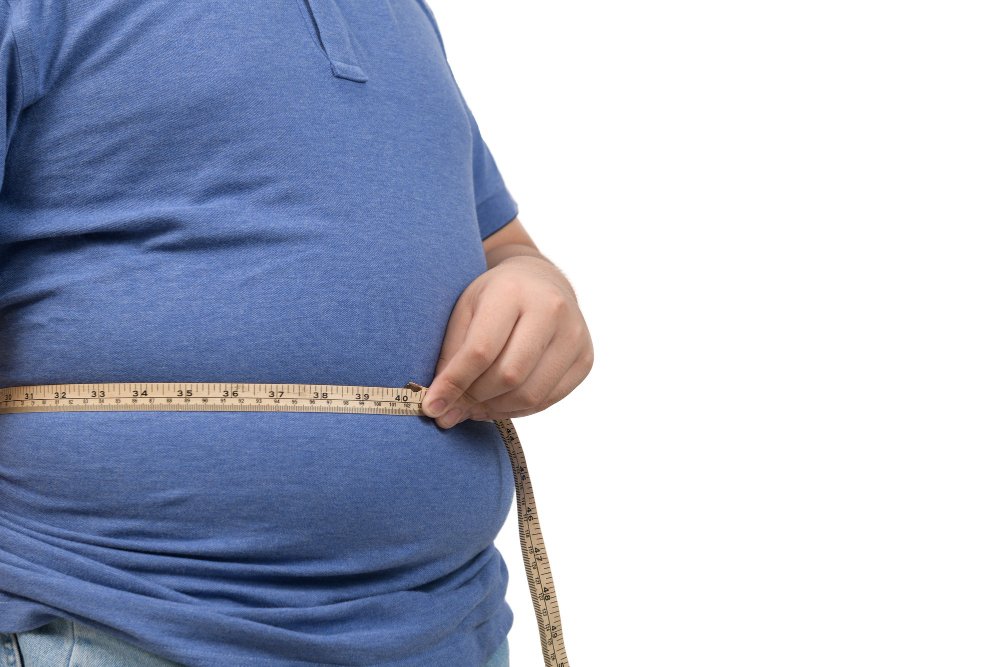
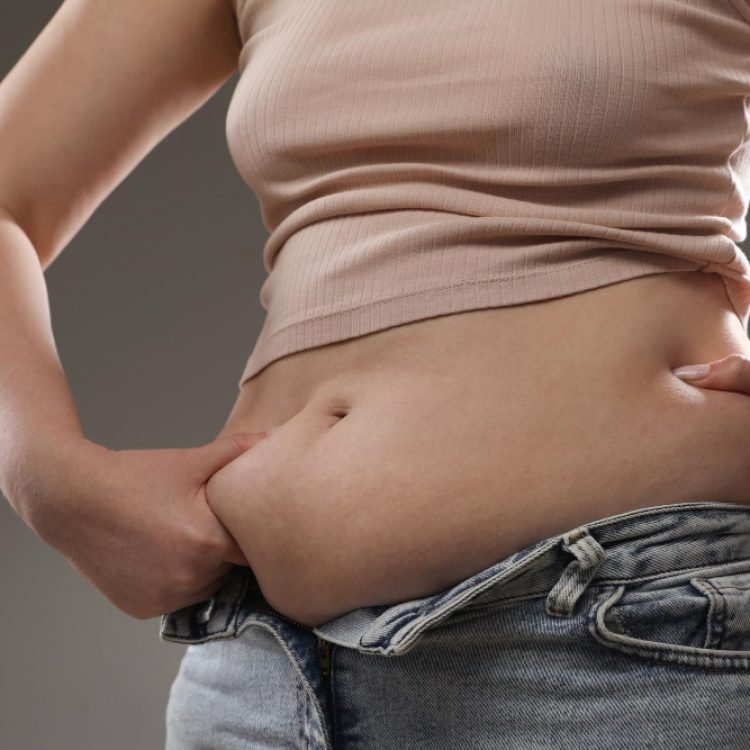
Is an Apron Belly the Same as Loose Skin?
Is an apron belly the same as loose skin? No. An apron belly is a hanging fold containing both skin and fat, often sitting over a weakened abdominal wall. Loose skin is skin alone, with little fat left in it. The distinction changes what happens next, including whether the NHS has any route at all.
Check our Apron Belly concern page for basics about an apron belly.
On this page
- What separates them
- Why people have both
- The third possibility
- Why the label matters
- The contradiction
- What to ask
- FAQs
What actually separates an apron belly from loose skin
An apron belly, which clinicians call a panniculus or pannus, is a fold of skin and subcutaneous fat hanging from the lower abdomen. Loose skin is skin that has lost its recoil, with little fat remaining inside. They look similar from outside and behave completely differently.
| Apron belly (pannus) | Loose skin | |
|---|---|---|
| What is inside the fold | Skin and a layer of fat | Mostly skin, little fat |
| How it feels pinched | Thick and heavy, hard to pinch thin | Thins out between your fingers |
| Usual cause | Weight gain, pregnancy, or both | Weight loss, ageing, or both |
| Does it shrink if you lose weight | Yes, the fat component does | No, skin does not retract to order |
| Typical complications | Intertrigo, cellulitis, ulceration | Chafing and irritation |
| How NHS policy classes it | Can qualify as a functional problem | Treated as cosmetic |
The pinch is the most useful thing you can do yourself. Lift the fold and feel it between thumb and fingers. A fold that compresses to something thin is mostly skin. One that stays thick and heavy has fat in it, and that fat responds to weight change in a way the skin will not.
A pannus is also graded by how far it hangs. The StatPearls clinical reference describes a scale from grade 1, where the fold reaches the mons pubis, to grade 5, where it extends to or past the knees. Loose skin is not graded this way, because there is no comparable weight of tissue to measure.
The apron belly concern page covers what causes a pannus to form in the first place.
Why the same person often has both, one after the other
Almost every page on this subject treats these as two conditions you either have or do not have. For a great many people they are the same tissue at two different points in time.
An apron belly contains fat. Lose a significant amount of weight and the fat inside the fold reduces, while the skin stretched around it does not shrink to match. You are left with the same fold, in the same place, now made mostly of skin. The apron belly has become loose skin.
Someone measuring progress by whether the fold has gone will conclude nothing worked, when the composition has changed substantially. And someone told their problem is “loose skin” after bariatric surgery is being described accurately, but that description places them in a different category from the one they were in before.
Does weight loss cause loose skin covers what determines how much skin retraction you get, and does an apron belly improve on its own covers what happens if you leave a pannus alone.
The third possibility that gets missed
A lower abdomen that protrudes or hangs is not always skin or fat. It can be the abdominal wall itself, and two versions of that matter.
The first is separation of the abdominal muscles, common after pregnancy, where the gap between the two halves of the central muscle lets the abdominal contents push forward. That produces a bulge that is neither skin nor fat, and no amount of weight loss flattens it. Does ab muscle separation get better over time covers that distinction.
The second is a hernia, which carries a safety point. A hernia is a bulge where tissue pushes through a weak spot in the abdominal wall. The NHS describes a lump that may grow when you cough or sneeze and shrink when you lie down, sometimes with tight or stretched skin over it, and notes pain is often more common with smaller hernias while a large one may not hurt at all.
The NHS advises seeing a GP if you think you have a hernia, and contacting NHS 111 urgently if you have a hernia along with pain in or around it, a bloated tummy, nausea or vomiting, vomiting blood or vomit resembling coffee grounds, constipation, a high temperature or feeling hot, cold or shivery, or sudden confusion. Pain in or around a hernia can indicate strangulation, where the muscle tightens around internal organs.
If any part of your fold is firm, tender, newly changed in shape, or sits over something that bulges when you cough, that is a question for a GMC-registered doctor rather than something to classify from a web page.
Why the label matters more in the UK than you would expect
In most countries this is terminology. In the UK it determines whether an NHS pathway exists, because commissioning policies draw the line between the two categories explicitly.
The NHS Cheshire and Merseyside policy on abdominoplasty and apronectomy states that excess skin alone is not treated as a medical problem and describes it as mainly cosmetic unless it causes functional problems. For funding to be considered, that policy requires all of a set of criteria to be met, including intertrigo, meaning inflammation or infection of the skin folds, with broken skin integrity shown by cellulitis, ulceration, abscesses, lymphoedema, skin necrosis or an equivalent. The condition must have persisted despite proper non-surgical care, including skin hygiene, dressings, suitable clothing and topical treatments, with “chronic” usually defined as not less than three months.
The same policy sets requirements on age, a current body mass index stable for at least 12 months, no previous diagnosis of body dysmorphic disorder, and being a non-smoker without ongoing alcohol or drug misuse. It also contains a separate route for apronectomy alone, for people who cannot reach the lower threshold.
Policies from other Integrated Care Boards, including NHS Bath and North East Somerset, Swindon and Wiltshire, state that excess skin following deliberate or post-bariatric weight loss will not be offered as routine NHS provision, and that bariatric surgeons are expected to tell patients so beforehand. That policy also notes it does not apply where abdominal wall repair is needed alongside another medically necessary procedure, such as complex hernia repair.
Criteria are set locally and vary, so the detail where you live will differ. The pattern does not: a fold with documented skin breakdown has a route to consider, and skin alone does not.
The contradiction inside the criteria
Read those criteria together and a genuine tension appears.
Funding generally requires both a low, stable body mass index and current skin breakdown inside the fold. But the fold most likely to cause recurrent infection is the heavier one, more common at a higher weight. Lose enough weight to satisfy the first requirement and the fold becomes lighter and drier, which can resolve the very problem that qualified you under the second.
Policies partly anticipate this, which is why the Cheshire and Merseyside document includes a separate apronectomy route for people whose body mass index sits above the main threshold but who have lost a defined proportion of their excess weight. Whether a case fits is a clinical judgement, not something to calculate from a policy document.
What follows practically is about documentation rather than weight. If your fold has been getting infected, that needs to be in your medical record each time, with what was prescribed. A history of treated episodes is the evidence these policies turn on, and it cannot be reconstructed afterwards from memory.
This page is not a reason to pursue rapid weight loss to reach a threshold. Weight loss driven by an eligibility criterion rather than by health is a conversation to have with your GP, not a target to set yourself.
If you want to understand the treatment side rather than the decision side, that sits on revitalizeinturkey.com rather than here.
What to ask your doctor
- Is this a panniculus, skin laxity, abdominal wall separation, a hernia, or a combination?
- If it is a pannus, what grade would you record it as?
- Has each episode of skin infection in the fold been documented in my notes, with the treatment given?
- Does my local Integrated Care Board policy give me any route, and which criteria am I measured against?
- Does anything about this fold need assessing for a hernia?
Frequently asked questions
How do I tell if I have an apron belly or just loose skin?
Lift the fold and pinch it. Skin alone thins out between your fingers, while a fold with fat in it stays thick and heavy. Weight change is the other clue: a fold that reduced as you lost weight contained fat, and one that has not changed is mostly skin, which does not retract on demand.
Can an apron belly turn into loose skin?
Yes, and it commonly does. The fat inside the fold reduces with weight loss while the stretched skin around it does not shrink to match. The fold stays in the same place but changes composition. People often read this as no progress, when what has actually happened is that one problem has become a different one.
Does the NHS treat loose skin and an apron belly differently?
Yes. NHS commissioning policies generally class excess skin alone as cosmetic, while a fold causing documented functional problems, such as infection with broken skin, can be considered for funding against a defined set of criteria. Criteria are set by each Integrated Care Board and vary, so check the policy for your own area.
Could my apron belly actually be a hernia?
It could be hiding one, which is worth knowing. A hernia typically bulges when you cough or sneeze and settles when you lie down. The NHS advises seeing a GP if you suspect one, and contacting NHS 111 urgently if you have pain in or around it, vomiting, a bloated tummy, fever or sudden confusion.