Consultations in London & Manchester | Treatment in Izmir, Turkey | Caring for UK patients since 2005

Consultations in London & Manchester | Treatment in Izmir, Turkey | Caring for UK patients since 2005
Also called: ovarian cyst, ovarian cysts, cyst on ovary
TYPICALLY OCCURS
TREATED BY
ALSO LINKED TO
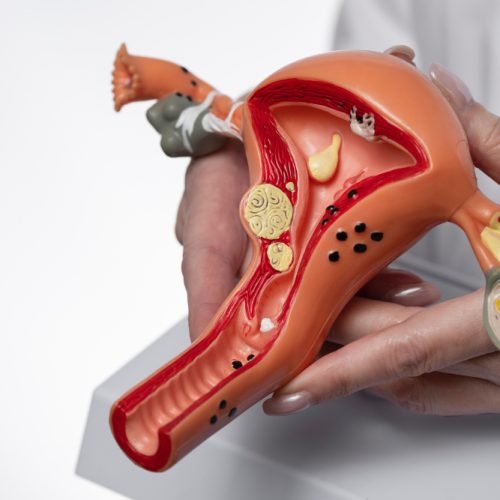
Many ovarian cysts develop as part of the normal menstrual cycle. During ovulation, an egg develops inside a small structure called a follicle. If the follicle does not release the egg or does not shrink normally afterwards, it can continue to grow and form a functional ovarian cyst. These include follicular cysts and corpus luteum cysts and are particularly common during the reproductive years. They are usually benign and often resolve naturally over several weeks or menstrual cycles without causing noticeable symptoms.
Not all ovarian cysts are related to normal ovulation. Endometriosis can cause blood-filled ovarian cysts known as endometriomas, while other benign growths such as dermoid cysts and cystadenomas arise from different types of ovarian tissue. Polycystic ovary syndrome (PCOS) is associated with numerous small follicles within the ovaries, although these are not the same as typical ovarian cysts despite the condition’s name. Cysts can also occur during pregnancy, and ovarian masses can develop after menopause, when functional cysts related to ovulation are no longer expected.
Whether an ovarian cyst causes symptoms depends on its type, size, position and whether complications develop. Larger cysts may produce pelvic pressure, abdominal fullness, bloating, pain during sex or urinary and bowel symptoms by pressing against surrounding structures. Occasionally, a cyst can rupture and cause sudden pain or bleeding. A cyst may also increase the risk of the ovary twisting around its supporting tissues, known as ovarian torsion, which can interrupt its blood supply and requires urgent treatment. Most ovarian cysts are non-cancerous, but certain characteristics — particularly in ovarian masses found after menopause — may require further investigation to exclude malignancy.
01
02
03
Treatments that address this
Medical assessment is worthwhile when pelvic pain or pressure persists, bloating is frequent or unexplained, periods change significantly, or discomfort during sex becomes recurring. A known ovarian cyst may also require follow-up if it is large, persistent, increasing in size or has features that require further investigation.
Ovarian cysts or masses identified after menopause deserve appropriate medical assessment because the causes and level of concern differ from those occurring during the reproductive years. Persistent abdominal bloating, feeling full unusually quickly, unexplained weight loss or ongoing pelvic symptoms should also be assessed rather than automatically attributed to a benign cyst.
01
02
03
04
Contact us to find out more about concerns and our treatment options with aftercare packages.